You are outside Stamford Bridge on Tuesday 20 April 2021 and it feels like a matchday that has been hijacked by something bigger than the match. The crowd is pressed up against the gates, stewards keep asking people to step back, and every few minutes a new chant rolls down the road like a wave. Somewhere beyond the noise, the team bus is trying to get in. The Super League was conceived as a boardroom reset. It collapsed the moment it met football’s live legitimacy test.
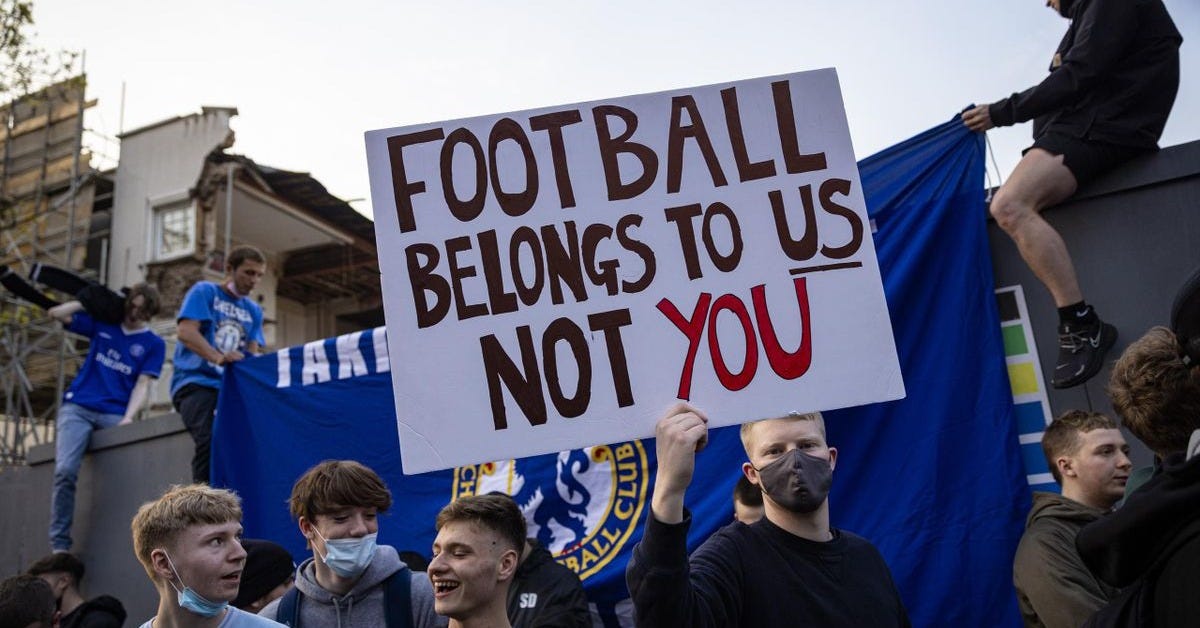
The Week The Consent Broke
The European Super League was announced late on 18 April 2021, presented as a new midweek competition governed by its “Founding Clubs” and built around a protected core. Within 48 hours, the six English clubs were moving to withdraw, and by the end of that week the project was in retreat rather than launch mode.
Before you criticise the people involved, it is worth granting the permission line that executives rarely get. The impulse was rational, and it was not new. Elite clubs have spent decades trying to reduce revenue volatility and increase their share of the European pie, usually by negotiating with UEFA, occasionally by threatening alternatives. In 2021 the threat became a product launch, with names attached and consequences immediate.
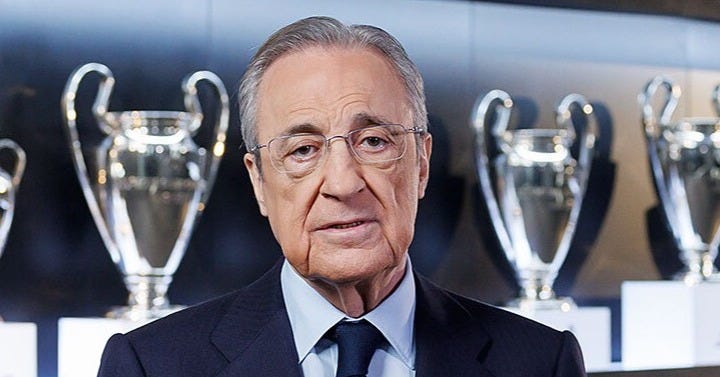
The Super League’s first failure was procedural, not ideological. A competition is not just fixtures and a logo. It is permissions, registrations, calendars, disciplinary recognition, player release rules, and the quiet acceptance of everyone you need to keep trading with: leagues, associations, broadcasters, sponsors, players, and supporters. Football is one of the few mass markets where a legitimacy crisis can form in public, in hours, and turn into a material business risk before the lawyers have finished their first call. (That Tuesday night at Stamford Bridge was not a focus group.)
Want to go deeper into football’s business side?
Paid members of this publication get:
- The weekly Boardroom Ball Briefing (Monday deep dives on deals, strategy and commercial moves)
- Exclusive interviews with key decision-makers across football
- Quarterly trend reports on the biggest strategic and financial shifts in the game
Membership is €7/month or €60/year (best value).
If Boardroom Ball helps you understand why things happen off the pitch, this is where we go even deeper.
👉 Upgrade here.
Closed Design In An Open Pyramid
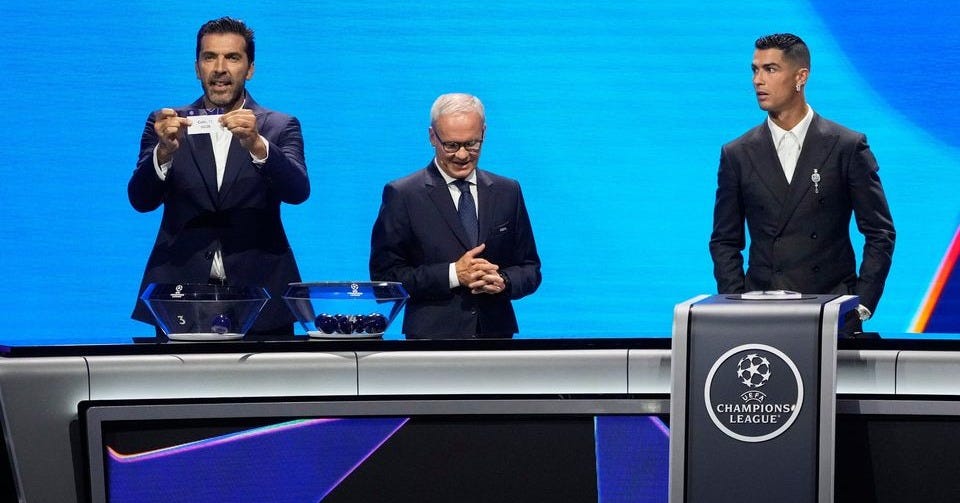
The Super League’s design clashed with the central mechanic that makes European football commercially resilient: access must be earned and can be lost. The Champions League sells excellence, but it also sells qualification, and the weekend race for places is part of the midweek product. UEFA’s own language went straight to that point, condemning a “closed” model as an attack on open competition and sporting merit.
This is where the project misunderstood what it was trying to displace. In most industries, you can build a premium tier by bundling the best brands and calling it convenience. In football, convenience is not the primary value. The primary value is that competition outcomes have consequences, and that the route to elite stages runs through domestic performance, licensing, and sporting merit. UEFA did not have to win a philosophical argument. It had to hold the line that the ecosystem already depends on.
The legal story later underlined the same point from a different angle. In December 2023, the Court of Justice of the European Union held that FIFA and UEFA rules requiring prior approval for rival competitions, and aspects of related commercial rules, could be incompatible with EU law if they are not based on transparent, objective, non-discriminatory and proportionate criteria. The ruling did not create a new competition. It highlighted that the gatekeeper’s processes must be defensible. The Super League’s problem in April 2021 was simpler and more brutal: it could not assemble consent even if the courts later questioned the gate.
The Coalition With Real Sanctions
The Super League failed because it ran into a coalition that could punish it quickly, and in multiple directions.
Start with leagues. The Premier League publicly condemned the proposal on 18 April 2021, warning it would “destroy” the dream of climbing through the pyramid. Two days later, after meeting with clubs and The FA, the Premier League said the 14 non-participating clubs had “unanimously and vigorously” rejected the plans and that the league was considering “all actions” available. That is not theatre. It is a signal that domestic operating conditions could become hostile overnight.
Then consider the bargaining architecture. The European Club Association, later rebranded as European Football Clubs, sits at the heart of how modern European club football is negotiated. In April 2021, its executive board appointed Nasser Al-Khelaifi, Chairman and CEO of Paris Saint-Germain, as Chairman. Whatever your view of club politics, this is how the calendar and the money actually get shaped. A breakaway league is not just a new competition. It is an attempt to exit the negotiating room and take the biggest customers with you.
Finally, there is supporter legitimacy, which in football operates like a regulator because it can impose costs at speed. The English withdrawals were not explained in balance-sheet language. They were explained as a response to having listened. Tottenham chairman Daniel Levy apologised for the “anxiety and upset” caused. John W. Henry, principal owner of Liverpool and head of Fenway Sports Group, issued a public apology, taking responsibility for the disruption. When club owners have to front up personally, it is usually because the brand damage is no longer containable inside a statement.
Today’s newsletter is sponsored by Champions Travel.

Champions Travel is an official ticketing partner of the biggest clubs in European football.
Irish owned and operated, Champions Travel is an official agent to over half of the teams in the Premier League including Manchester United, Liverpool and Arsenal. Plus, European giants like FC Barcelona, Bayern Munich, Juventus and more.
Trusted by thousands of fans, Champions Travel sort your ticket, hospitality and hotel.
Travel with trust. Travel with passion. Travel with Champions.
See available fixtures and packages here.
The Money Was Real, The Product Was Not
The Super League was not a fantasy. It had a financing story. Reuters reported that JPMorgan was the sole lender and that the plan included a 3.5 billion euro “welcome bonus” pot for participating clubs. That matters because it reveals the underlying incentive structure: the project was designed to trade legitimacy risk for revenue predictability and upfront liquidity.
Again, the behaviour is rational. Modern elite clubs operate under portfolio logic. Their wages and transfer spending are anchored to revenue streams that can swing with one missed Champions League qualification. Investors, owners, and executives prefer predictable cashflows because they make the enterprise easier to finance and the downside easier to manage. A closed or semi-closed European competition is one way of trying to manufacture that stability.
But the Super League launched without the other ingredients that turn financing into a durable market. There was no settled distribution strategy, no confirmed broadcasters, no accepted regulatory framework, and no credible answer to how domestic leagues would interact with it. It tried to treat the ecosystem as an optional add-on. In football, the ecosystem is the product.
UEFA’s response was revealing. Rather than simply crushing the idea, it moved to make the incumbent tent more attractive. The Champions League’s new post-2024 format expanded to 36 teams with a league phase, with each team playing eight matches against different opponents. You can call that sporting reform or revenue defence. Either way it shows the second-order effect: even a failed breakaway attempt can change the terms of the existing market.
(If you need an everyday comparison, this is the streaming bundle problem: keep your premium customers inside the platform by expanding the catalogue, even if the experience becomes more crowded.)
Failure As A Governance Template
The cleanest proof the Super League failed is that its endgame became paperwork and reintegration, not matches. On 7 May 2021, UEFA announced reintegration measures after nine of the 12 clubs signed a “Club Commitment Declaration”, including a combined €15m contribution to grassroots football and agreed penalties if they attempted another breakaway. The system did not just win the argument. It wrote the settlement.
By February 2026, the story reached its administrative conclusion. Reuters reported that Barcelona were unanimously re-admitted to the European Football Clubs body after submitting their withdrawal from the Super League project, with their application presented to the board by chairman Nasser Al-Khelaifi, President of Paris Saint-Germain. Reuters also reported that UEFA and Real Madrid reached an “agreement of principles” to resolve their legal dispute, centred on sporting merit and the welfare of European club football, effectively ending the last major institutional fight around the project.
The deeper lesson is not that breakaway leagues are impossible. It is that European football now has a clearer map of where the power sits. Clubs learned that you can push UEFA hard, but you cannot bypass legitimacy without triggering coordinated sanctions from leagues, peers, and supporters. UEFA learned that monopoly instincts are not enough, and that governance processes must be transparent and defensible in court as well as in the street.
The escalation is already visible. The Super League failed as a product, but it succeeded as a bargaining threat that will live on in future negotiations about format, revenue distribution, and calendar control. European football has, in effect, institutionalised the possibility of exit as a negotiating tool. That raises the stakes for every reform cycle, because the next crisis will not be settled only by who has the best lawyers or the biggest brands. It will be settled by whether the system can keep its biggest participants inside the tent without hollowing out the principle that made the tent valuable in the first place.
📲 For more football business content
✅ Check out our YouTube Channel and follow us on Social Media for more content from the world of football business. ⚽️📈
- YouTube: [@boardroomball]
- LinkedIn: [Boardroom Ball]
- Instagram: [@boardroomball]
- TikTok: [@boardroomball]