The start of the season wasn’t a bed full of roses. Atlético Madrid was a reality check for Xabi Alonso and his team, with alarm bells ringing, questioning the ability of this group of players to impose themselves against big clubs. The win against Barcelona denied such thoughts. Nevertheless, the momentum built in El Clásico quickly vanished, and the crisis knocked on the White House door.
Since then, Real Madrid has played 12 games in which they have won 6 matches, drawn in 3 fixtures, and come out frustrated against Liverpool, Celta Vigo, and Manchester City.
Before the October international break, Real Madrid looked balanced in terms of what was expected and achieved. After that, Real Madrid entered a cycle of underperformance. You may think that Real Madrid's defense was in safe hands. But that’s far from reality when Courtois’ heroic saves and the opponent’s quality shots are considered in the equation.
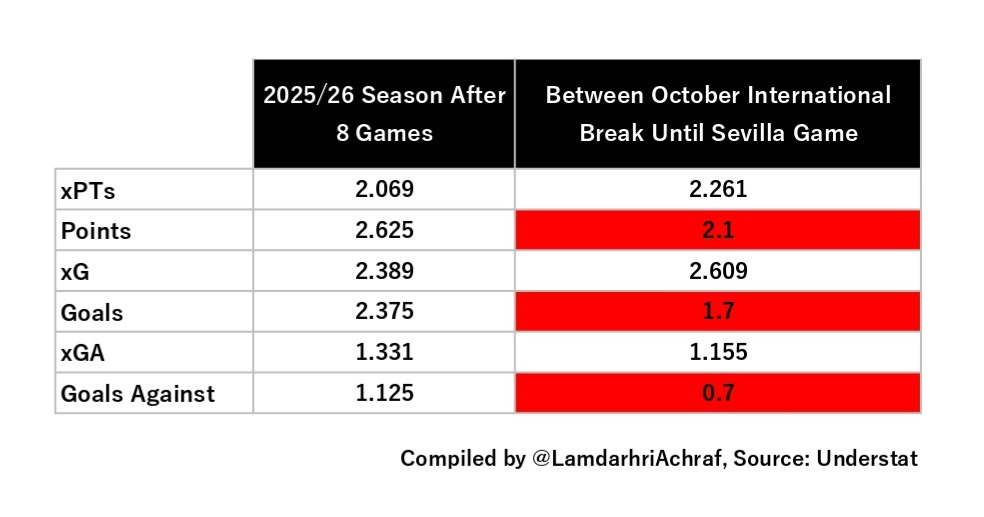
Injuries, schedule, players underperforming, some of Xabi Alonso’s game plans, team selections, game management, etc have contributed to Real Madrid’s current state.
This piece is about discussing what went wrong with Xabi Alonso’s team. Is the situation that bad, or is it a matter of consistency in executing things intensively and qualitatively?
🌪️ Chaotic off-ball state
“It has been difficult for us to react; we almost react when we are playing with 10 men.” Xabi Alonso, after the Celta Vigo game, hinted at the lack of intensity when both teams had the same numbers on the pitch. The word “react” that Xabi Alonso used in the post-match interview holds all sorts of meaning. Intensity and urgency are two of them. You cannot jog around against Giráldez’s team, which is, according to Opta:
- Top five teams in buildups: 2.53 per 90 minutes;
- Top three in goals scored from buildups: 0.18 per 90 minutes;
- Top six in direct attacks: 1.59 per 90 minutes;
- Top six in goals scored from direct attacks: 0.18 per 90 minutes.
…and expect to survive. The price will be costly. Take this sequence, for instance. The lack of urgency is glaringly clear in Vinicius Junior's run and Celta Vigo’s center-back's ease and comfort in releasing the pass. Tchouaméni’s delayed run, as well, contributes to paving the road for Giráldez’s boys to progress, despite Valverde pointing with his hands to cover the center.
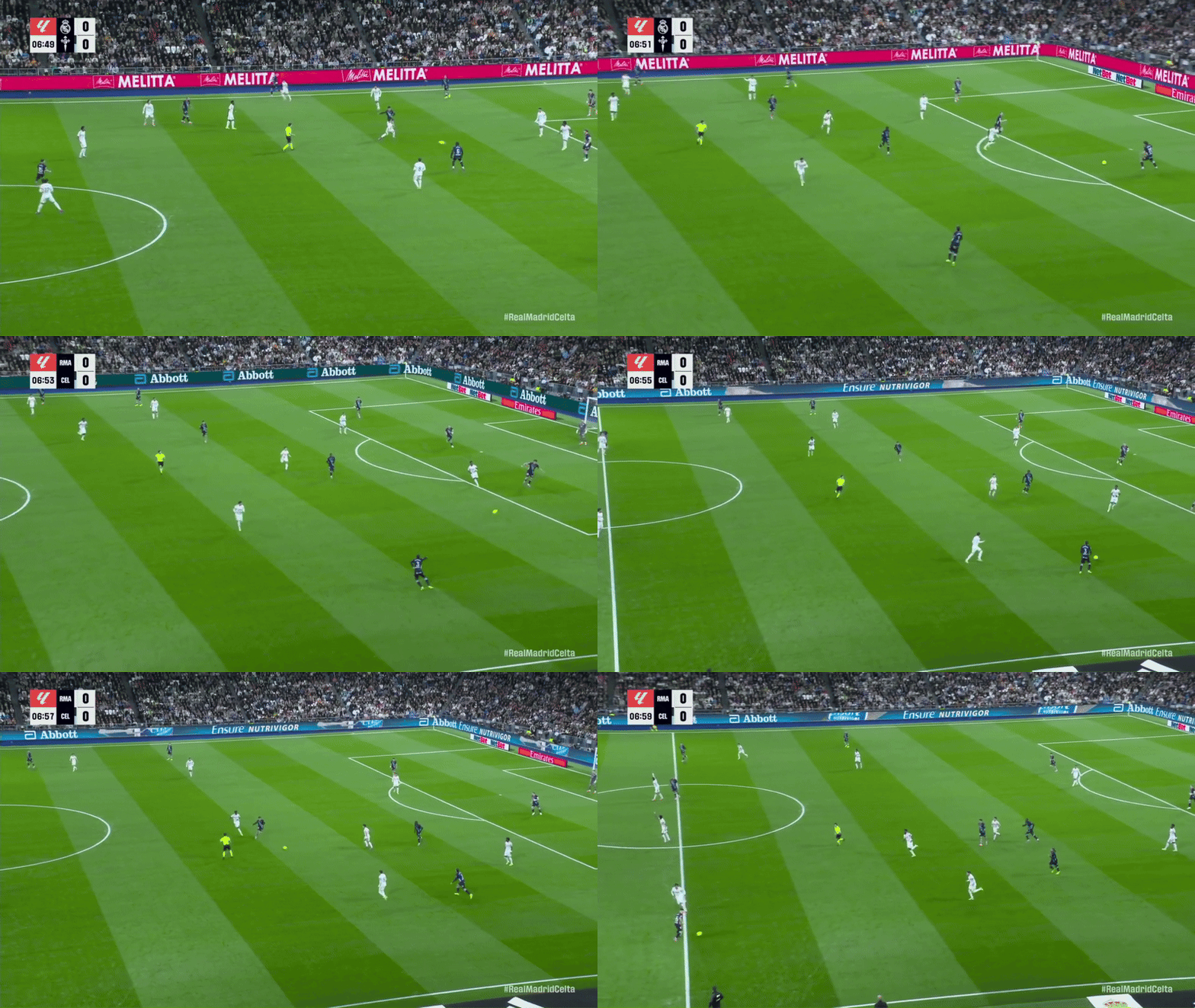
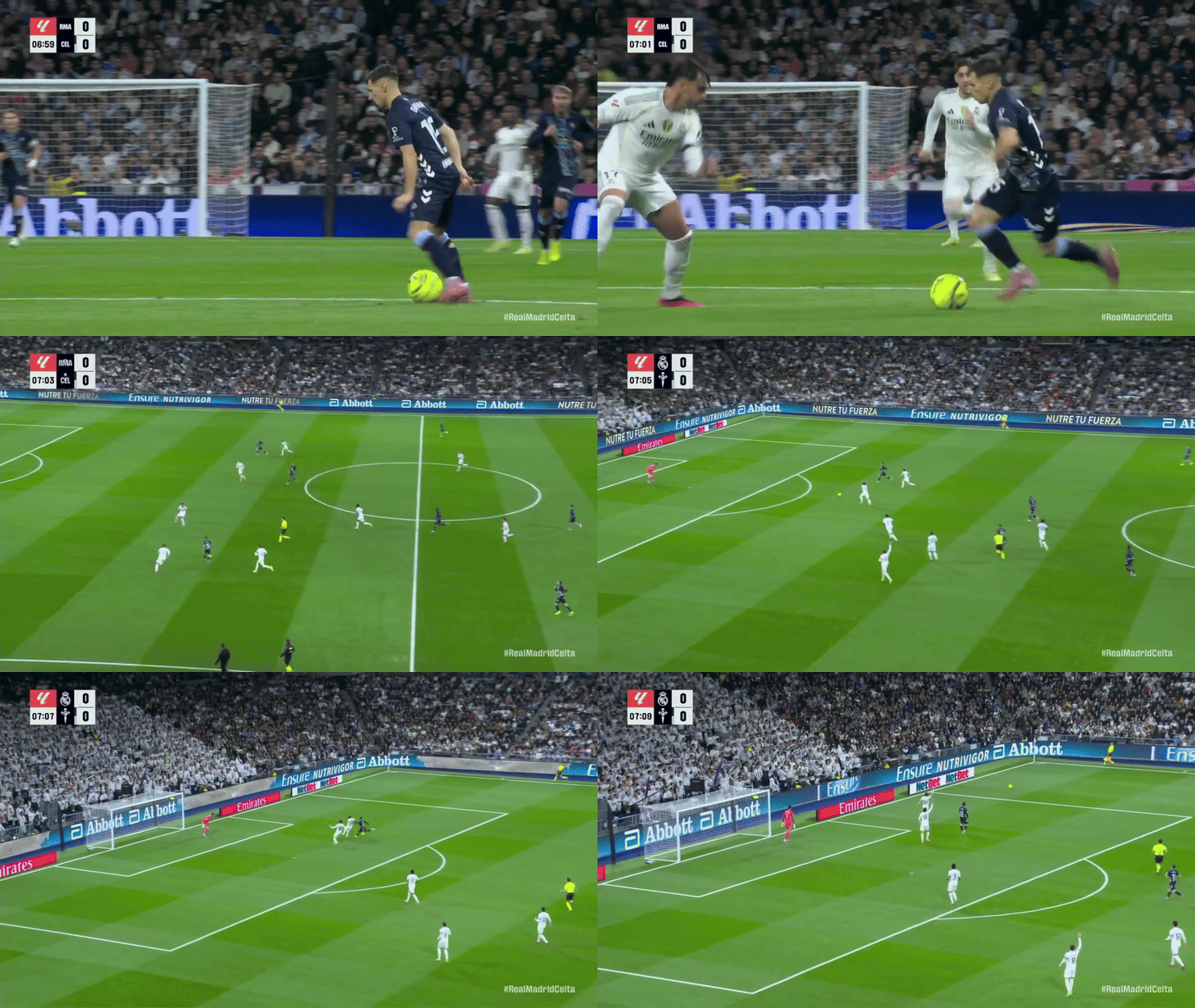
Starting the press in a lethargic way usually gives birth to a cascading effect. Here, it leads to Asencio getting isolated in a 1v1 situation against a good dribbler in Zaragoza. What adds insult to injury is Asencio’s 1v1 approach, as the Spanish defender closes the inside of the pitch and attempts to drive Zaragoza toward the outside, without adjusting the distance between his legs while running. So, that allows Zaragoza to cut inside and punish the space behind a disoriented defensive line.
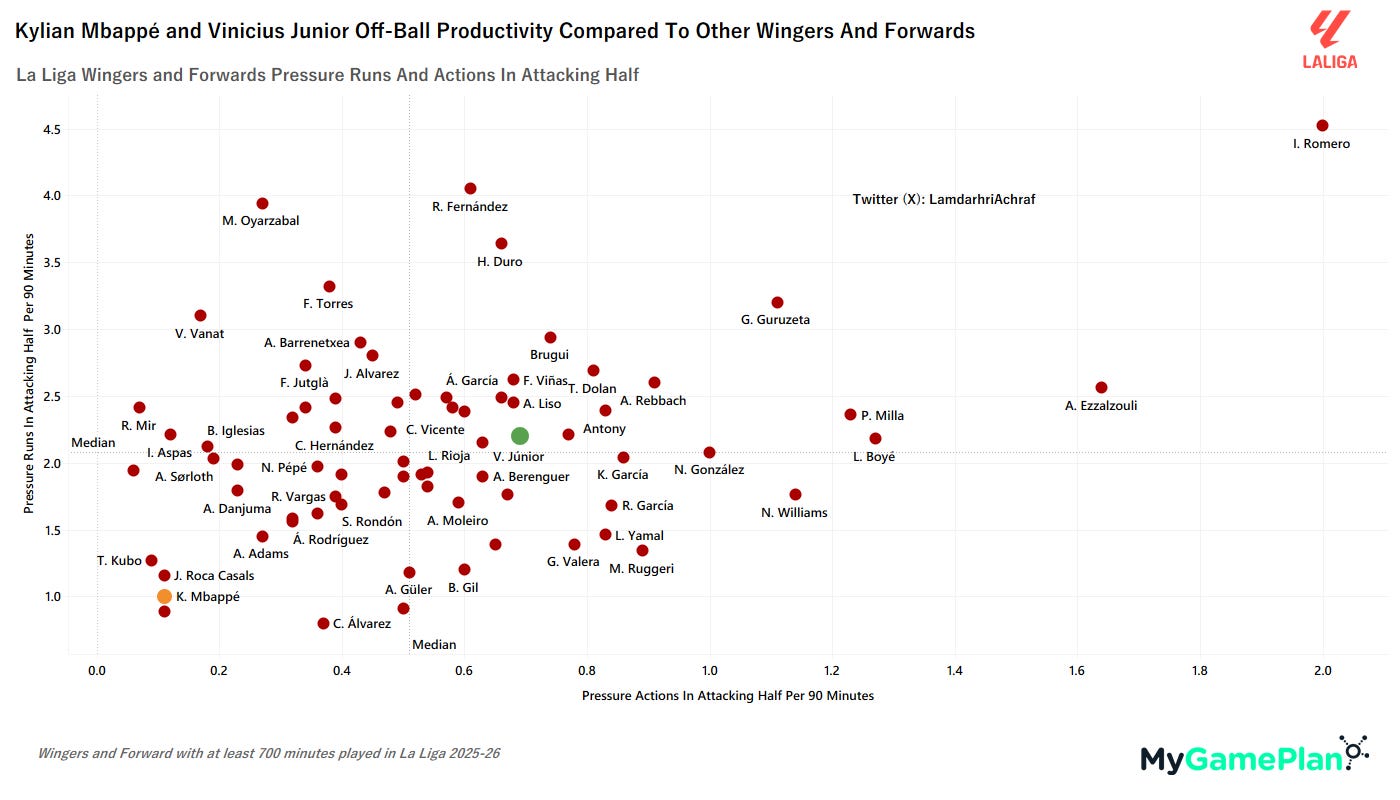
This is how Kylian Mbappé and Vinicius Junior's pressure actions and runs in the final third numbers look compared to their peers in La Liga. While the latter isn’t consistent in maintaining a high level of work rate off-the-ball, the former is nonexistent.
The picture is bigger than limiting the discussion to numbers. It extends to a lack of basics to defend, including:
- Passing lane coverage;
- Lack of sufficient scanning;
- Lack of intensity;
- Lack of synergy and understanding of the opposition buildup, progression, and final third mechanisms.